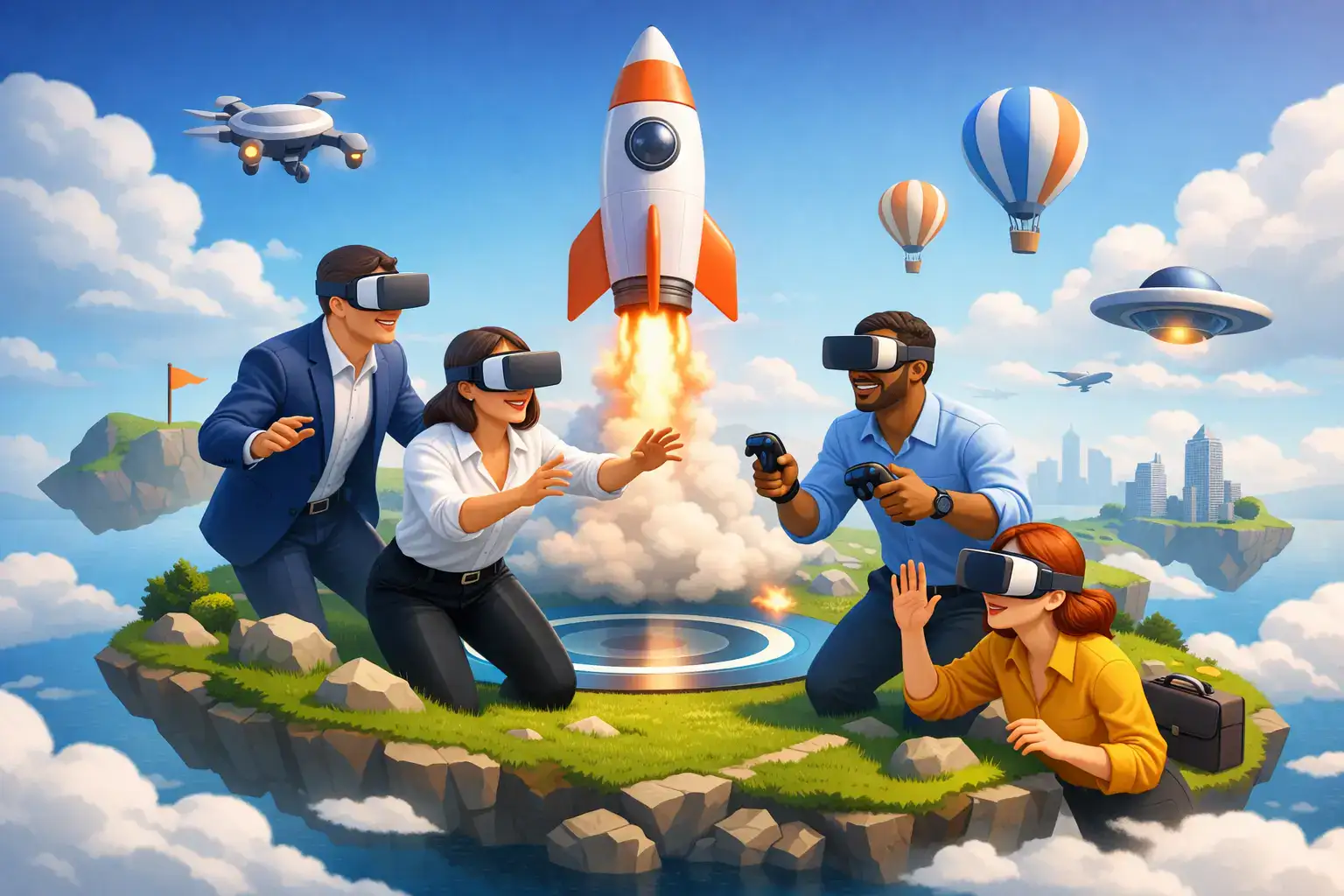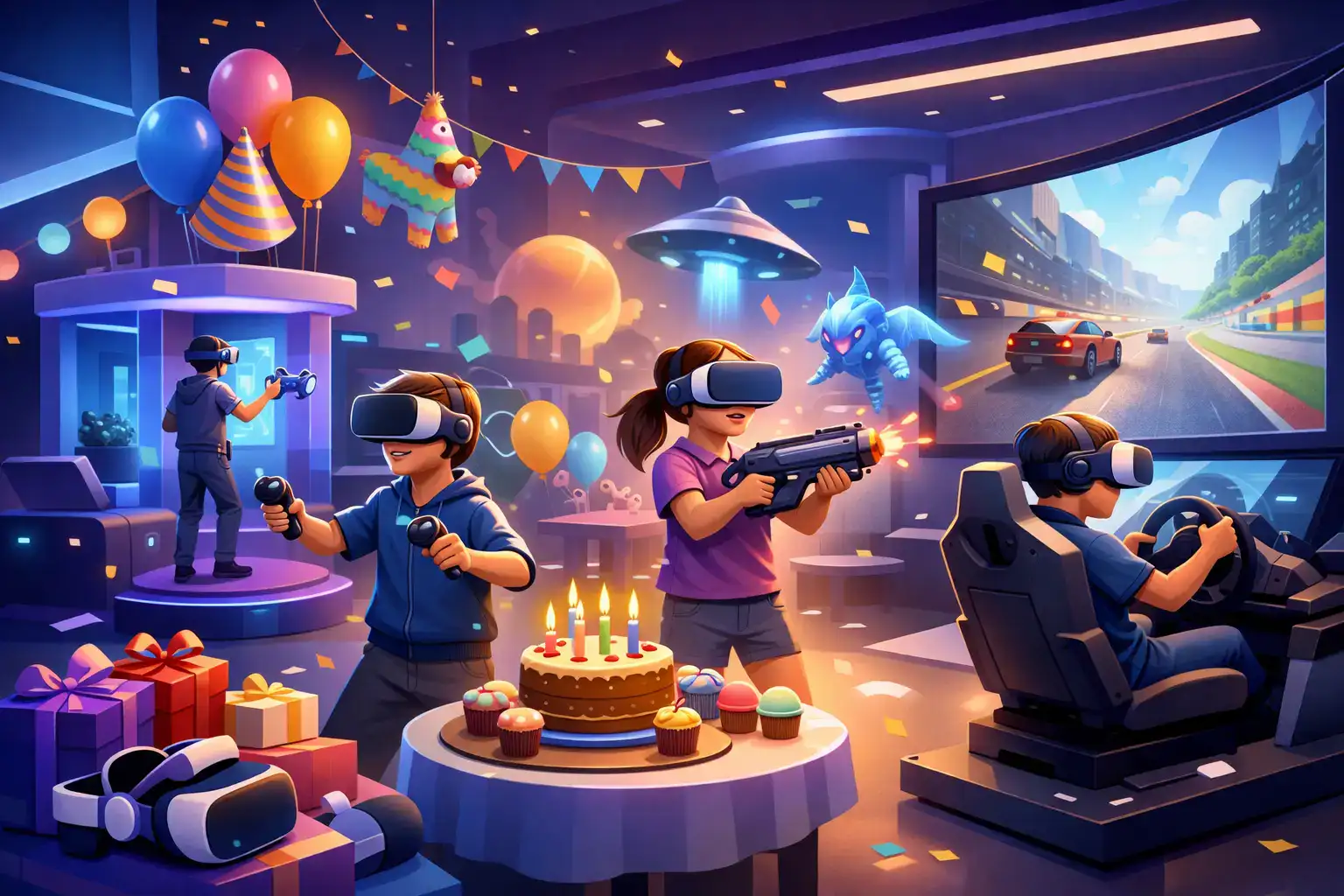
The fastest way to lose a team is to book another stiff group outing that feels like a mandatory meeting in different lighting. Corporate VR team building works because it flips that script. Instead of small talk over appetizers or another escape room your team has basically seen before, people step into a shared experience that feels active, surprising, and genuinely memorable.
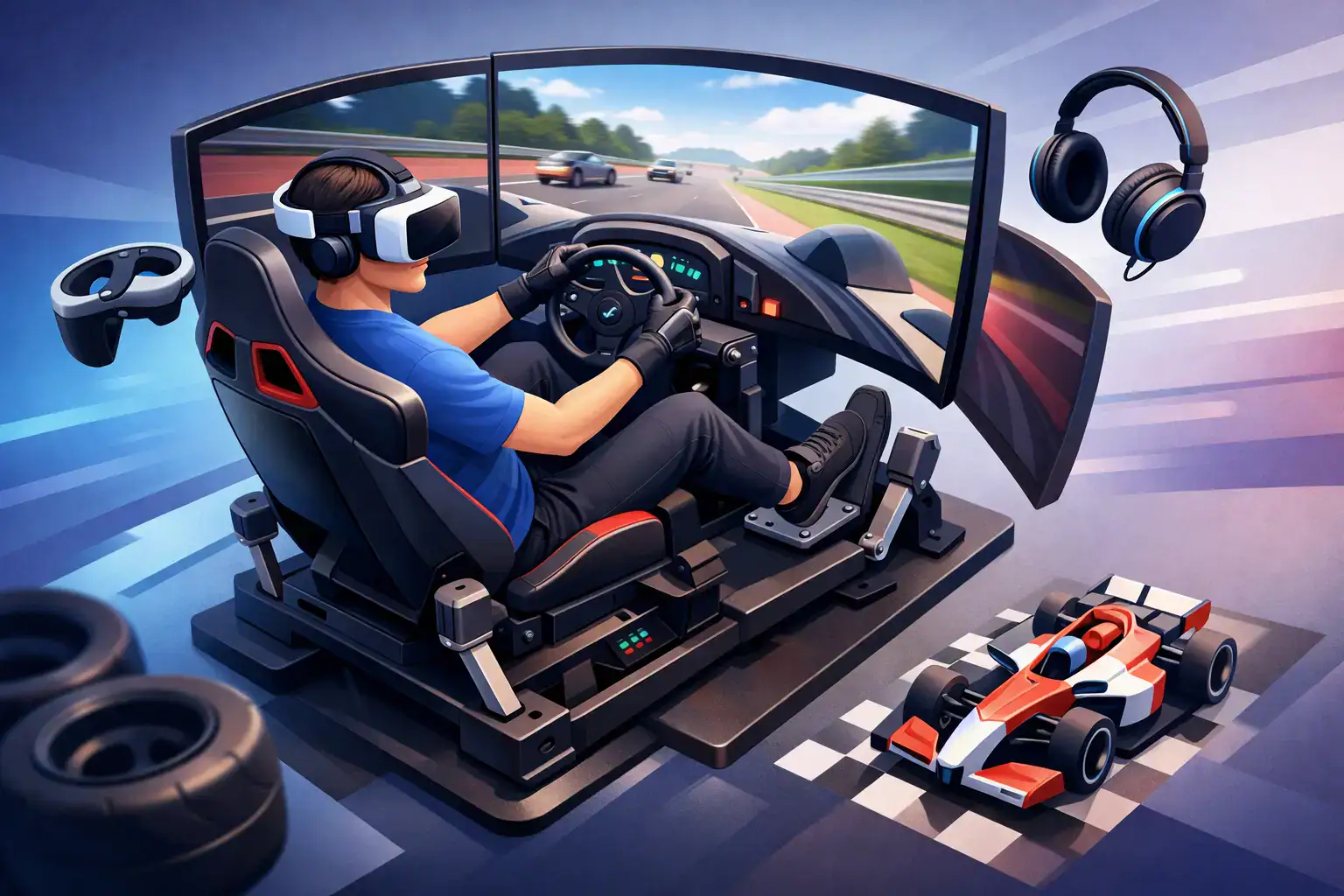
That shift matters more than most companies think. Team building only works when people stop performing their work persona for a minute and start reacting as real humans. Virtual reality does that fast. The headset goes on, the simulator moves, the audio kicks in, and suddenly your quiet analyst is laughing through a dragon flight while your department lead is trying to beat a lap time in a racing simulator. You learn a lot about people when the experience is vivid enough to break routine.
Why corporate VR team building feels different
A lot of group activities promise connection. Fewer create it on the spot. VR has an edge because it pulls people into a shared moment with very little warm-up time. There is no long explanation, no awkward team exercise, and no pressure to be funny or outgoing. The technology does the heavy lifting by giving everyone something immediate to react to.
That reaction is where bonding starts. Teams talk more naturally when they have a fresh experience to process together. They compare scores, swap stories, coach each other through first turns, and celebrate the people who surprised them. It is social, but it does not rely on forced networking.
The other reason it lands is novelty. Most staff have attended enough lunches, bowling nights, and holiday mixers to know exactly how those events go. VR still feels new to many people, especially when it includes motion platforms, panoramic visuals, and attraction-style design instead of a basic headset in an empty room. The event feels premium, not recycled.
What corporate VR team building actually improves
Not every team event needs to produce a measurable business outcome by Monday morning. Still, the best experiences do create real benefits. Corporate VR team building tends to support morale first, then communication, then cross-team familiarity.
Morale improves because the event feels like a reward instead of an obligation. People remember the sensation of flying, racing, dropping, or exploring because it is physical as well as visual. It has energy. That matters after a busy quarter, during onboarding periods, or when teams are tired of screen-heavy workdays.
Communication improves in a more casual way. In VR environments, people naturally coach one another, react in real time, and share quick feedback. Even when the attraction itself is not designed as a business exercise, the shared experience gives people an easier way back into conversation.
Cross-team familiarity is often the hidden win. Many workplaces struggle with siloed departments that only interact through requests and deadlines. A good VR outing creates a neutral space where people meet outside hierarchy. That changes the tone when they are back at work.
The best formats for a work group
Not every VR setup suits a corporate event. If you are planning for a team with mixed comfort levels, attraction variety matters more than extreme intensity. Some people will want high-speed racing or full-motion simulator experiences. Others would rather start with exploration, cinematic adventures, or guided multiplayer activities.
That is why venue choice can shape the success of the event more than the concept itself. A location-based entertainment venue with multiple attraction types gives organizers room to match the event to the group instead of forcing the group to fit one game. It also helps if on-site staff can brief participants, guide transitions, and keep the pace moving.
For mixed-age staff groups or workplaces with a wide range of personalities, the sweet spot is usually a blend of adrenaline and accessibility. You want some wow factor, but you also want first-time users to feel comfortable joining in. The ideal event gives your thrill-seekers something to talk about without making cautious participants feel left out.
Who it works best for and when it may not
Corporate VR team building is especially strong for companies that want a high-energy social event without the polish and posturing of a formal function. It works well for sales teams, retail groups, customer-facing teams, leadership off-sites, seasonal celebrations, and staff appreciation events.
It is also a smart choice for teams with a broad age range. Unlike some sports-based outings, VR does not depend on athletic ability. Unlike a dinner event, it gives people something to do instead of just somewhere to sit. That makes it easier for mixed groups to engage on equal footing.
But it is not one-size-fits-all. If your event goal is deep strategic planning, conflict resolution, or intensive workshop time, VR works better as the energizing social component around that agenda, not as the agenda itself. It can absolutely strengthen connection, but it should not be asked to replace every type of team session.
There are practical considerations too. Some employees may be hesitant about motion-based attractions, and some may prefer lower-intensity options. Good event planning solves that by choosing venues with varied experiences and clear staff guidance. Comfort, accessibility, and pacing matter just as much as excitement.
How to plan a corporate VR team building event that people actually enjoy
The biggest planning mistake is overcomplicating it. Start with the size of your group, the amount of time you have, and the kind of energy you want. If the team needs a reset after a demanding stretch, choose something fun and fast-paced. If the goal is more social connection, look for formats that let people rotate through attractions, watch one another, and talk between sessions.
Give people a short expectation-setting note before the event. Tell them what to wear, how long the experience will run, and whether there are any ride or safety considerations. This does two things. It reduces uncertainty for first-time users, and it helps the event start on time.
It also helps to avoid framing the outing like a test. Nobody wants to hear that the company has planned a revolutionary teamwork challenge. People respond better when the invitation is simple: this will be fun, guided, and easy to join, even if you have never tried VR before.
On the venue side, look for operational support. Staff presence matters. So does sanitation, clear attraction instructions, group booking structure, and an environment built to host events instead of just individual drop-ins. A polished venue can make a corporate group feel looked after from the moment they arrive.
For companies in Sudbury or Fredericton, a venue like RealityScape VR can make that planning easier because the experience is built around immersive, event-ready attractions rather than a single-style gaming setup. That means more flexibility for teams with different comfort levels and interests.
What employees remember after the event
People rarely remember the branded cupcakes or the closing remarks. They remember the sensory moments. The rush of motion. The laugh that hit at the worst possible turn. The person from accounting who turned out to be absurdly competitive. The moment someone took off the headset and immediately wanted another round.
That is the real strength of VR as a team activity. It creates stories. And stories travel back into the workplace. They become inside jokes, hallway conversations, and the kind of shared memory that makes a team feel less transactional.
There is also a status benefit for employers here. Booking something current, immersive, and well-run sends a message that the company values experience, not just attendance. It feels modern without being cold. Futuristic without being intimidating. That balance is hard to get right with traditional event formats.
Is corporate VR team building worth the cost?
Usually, yes – if the event is chosen for the right reason. If you are simply hunting for the cheapest way to get everyone out of the office, there are lower-cost options. But lower-cost does not always mean better value. A forgettable event is expensive in its own way.
VR tends to justify its cost when the goal is impact. You are paying for novelty, immersion, and stronger group recall. You are also paying for a hosted experience that feels like a real occasion. For many teams, that creates more goodwill than another standard social booking.
The return is not just in photos or post-event chatter. It is in how quickly people connect during the outing and how often the experience comes up afterward. If your team has been stuck in routine, that kind of lift is hard to fake.
The best corporate events do not ask people to pretend they are bonding. They give them something exciting enough to make it happen on its own. That is where VR stands out – not as a gimmick, but as a shared experience with enough motion, spectacle, and surprise to wake a team up and bring them back together.