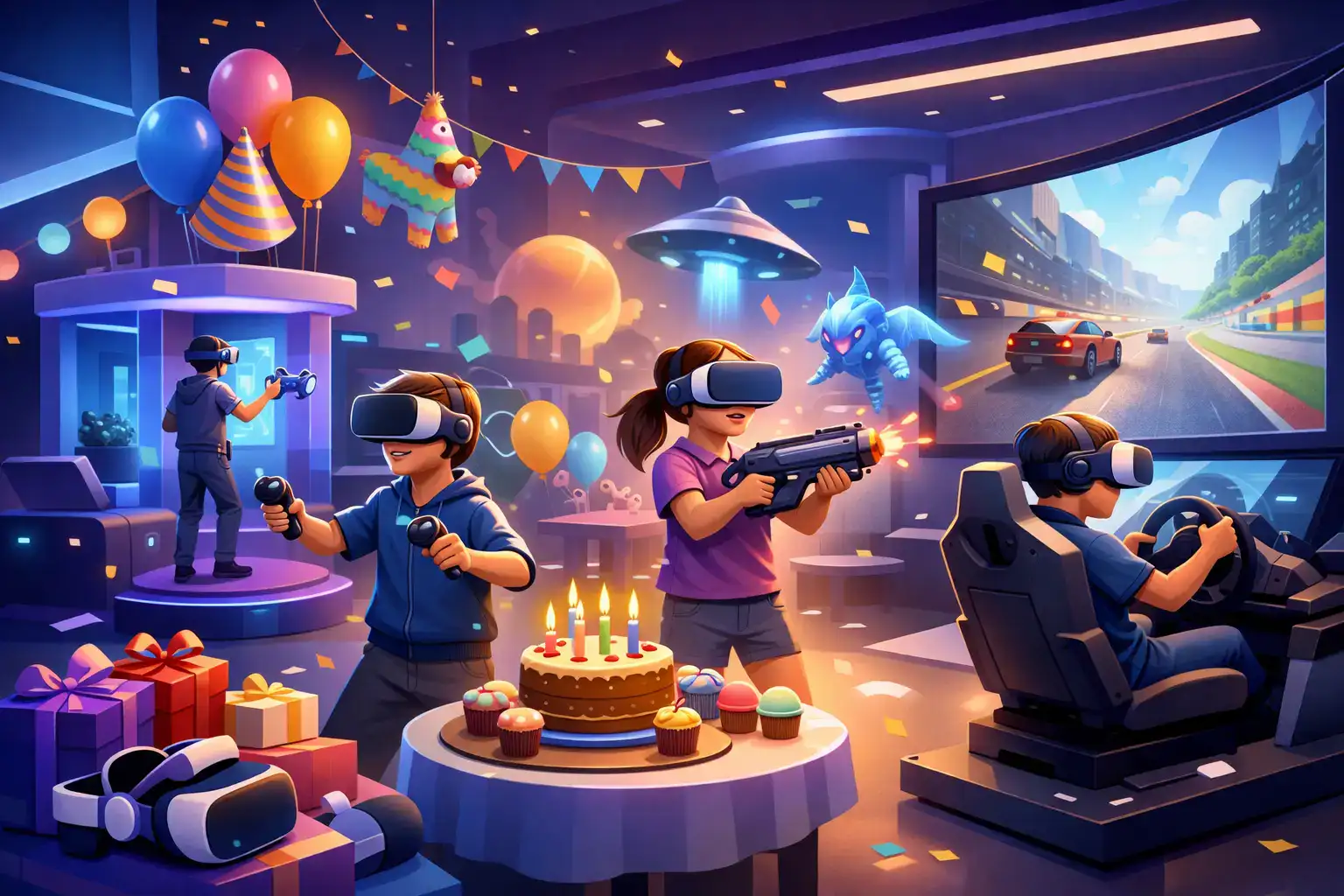
The moment the headset drops and the room erupts with cheers, a vr arcade birthday party stops feeling like a regular party and starts feeling like an event. That is the difference parents, teens, and group organizers are chasing now. Not another pizza table and a few token games, but a shared experience that feels futuristic, active, and genuinely memorable.
A strong birthday party has to do two things at once. It needs to thrill the guest of honour, and it needs to keep the whole group engaged. That is where virtual reality has a real advantage over more traditional party formats. Instead of asking guests to watch from the sidelines, VR turns the celebration into something everyone can react to, talk about, and remember long after the candles are blown out.
Why a vr arcade birthday party stands out
Most party venues offer one main activity and a bit of downtime around it. A vr arcade birthday party can offer much more range. One guest might want high-speed racing. Another might love underwater exploration or a soaring dragon flight. Someone else may be there for the drop-tower thrills or multiplayer competition. That variety matters when your guest list includes different ages, personalities, and comfort levels.
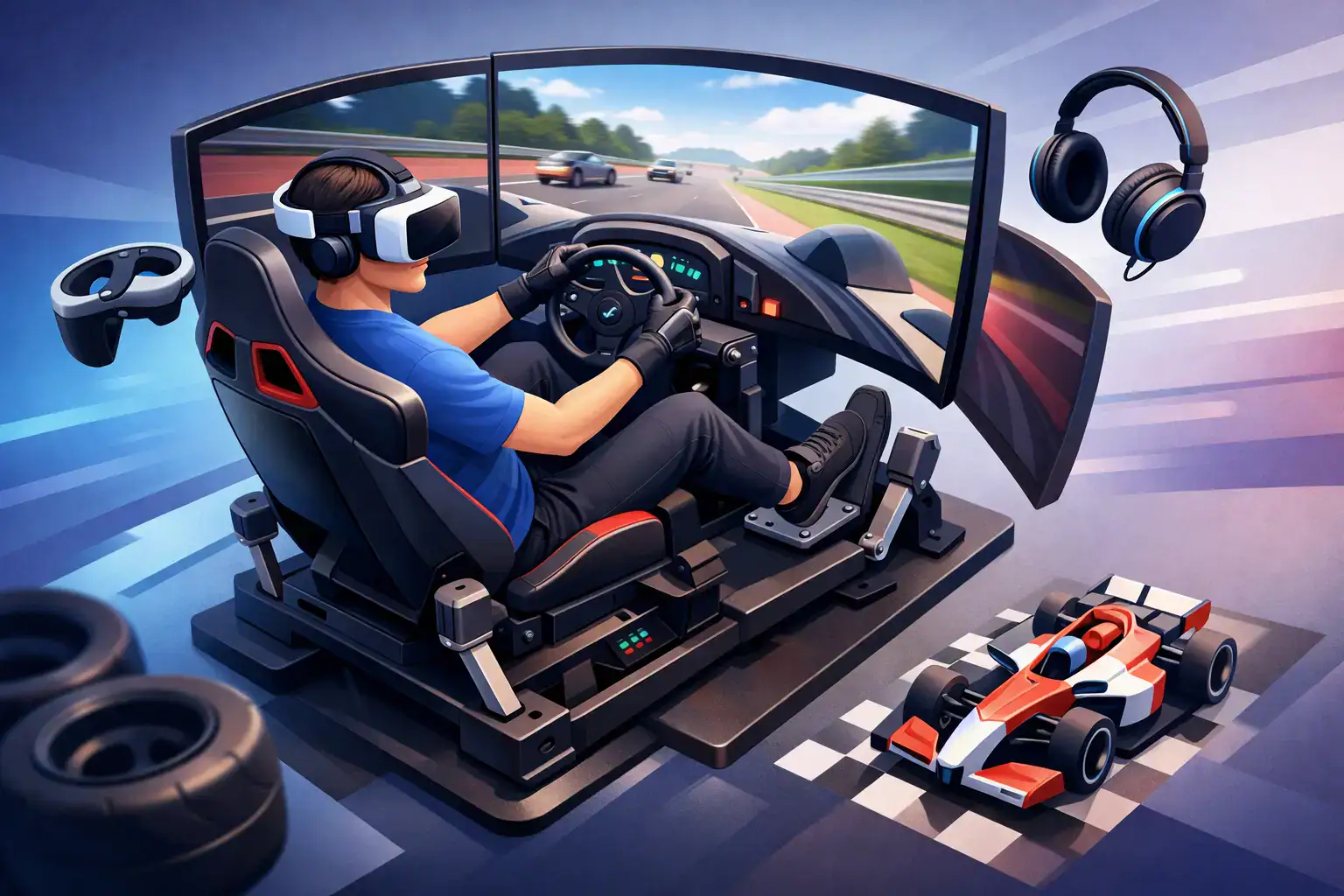
It also feels bigger than standard gaming. Location-based VR is built for impact. Motion platforms, panoramic visuals, spatial audio, and guided experiences make the action feel cinematic and physical, not passive. Guests are not just pressing buttons on a couch. They are leaning into turns, reacting to movement, laughing at each other’s screams, and stepping into worlds beyond imagination.
For parents, there is another benefit that matters just as much as the spectacle. A well-run VR party is structured. Staff guide the group, explain how everything works, keep sessions moving, and help first-time users settle in quickly. That makes the experience feel exciting without becoming chaotic.
What makes the experience work for groups
The best birthday experiences are social by design. That may sound surprising with headsets involved, but good VR arcades are built around group energy. Friends watch each other take on attractions, compare scores, swap stories, and build anticipation between turns. Even when one person is inside the action, everyone else is still part of the show.
That dynamic is especially useful for birthdays with mixed confidence levels. Not every child, teen, or adult arrives ready to jump into the most intense simulator. Some guests want a gentle first experience. Others want full-throttle movement and competition. A venue with multiple attraction styles gives the organizer more flexibility and gives guests more control over how adventurous they want to be.
This is also where staff support changes everything. First-time VR users usually need only a quick introduction, but that introduction has to be clear and reassuring. Good hosts remove the awkwardness fast. They answer questions, fit equipment properly, monitor comfort, and help guests move from curiosity to excitement within minutes.
Choosing the right format for the birthday group
Not every birthday party should be planned the same way. Age range, group size, and energy level all affect what the best setup looks like.
For younger kids, shorter attraction cycles and more guided transitions usually work best. The party should feel fast-moving, easy to follow, and light on waiting. Family-friendly experiences with clear visuals and simple objectives tend to land better than anything too technical or overly intense.
For tweens and teens, competition often becomes part of the appeal. Racing simulators, multiplayer arenas, and thrill-based attractions give the group something to rally around. This age group usually wants a party that feels cool, not childish, so the futuristic side of VR carries real weight.
For older teens and young adults, the strongest draw is often the sense of immersion. They want something that feels new, premium, and share-worthy. A venue that combines multiple attractions instead of a single VR station creates that bigger-night-out feeling.
There is a trade-off, though. If your group is very large, you will want a booking format that keeps people rotating efficiently. If your group is smaller, private access or more personalized pacing may create a better experience. It depends on whether you are planning for intimacy, high energy, or maximum variety.
Questions worth asking before you book
A birthday booking goes more smoothly when the practical details are clear from the start. Not all VR attractions have the same age recommendations, height requirements, or motion intensity. If younger children are attending, or if some guests are new to immersive rides, ask what experiences are best suited to beginners.
Session length matters too. A party that feels too short can leave guests wanting more in the wrong way, while one that runs too long can drain the energy from the room. The sweet spot is usually enough time for multiple attractions, some social time, and a clear event flow without dragging.
You should also ask about private versus shared formats, staffing support, food options, and how the venue handles setup and cleanup. Birthday planners are rarely looking for more work. They want a package that feels easy to manage while still delivering something spectacular.
Sanitation and safety are part of that trust equation. Modern venues should be ready to explain headset cleaning, ride supervision, and any weight or health restrictions tied to motion-based attractions. That is not a boring detail. It is what helps parents and organizers feel confident enough to book something new.
The sweet spot between thrill and accessibility
One reason VR works so well for birthdays is that it can feel futuristic without feeling exclusive. Guests do not need gaming experience to enjoy it. They do not need to understand the technology. They just need to show up ready to have fun.
That accessibility is a bigger advantage than many people realize. Traditional gaming parties can sometimes favour the most experienced players, leaving others half-involved. A high-quality VR venue shifts the focus. The attraction itself does more of the work, which means first-timers can still have a huge reaction and be part of the group’s best moments.
Of course, not every guest wants maximum intensity. Some will love motion-heavy simulators. Others may prefer more visual exploration and lower-adrenaline adventures. The strongest party venues make room for both. They create excitement without forcing every guest into the exact same experience.
That balance is part of what makes RealityScape VR such a compelling option for birthday groups in Canada. When a venue combines cinematic immersion, motion-driven attractions, and staff-guided event support, the result feels less like a standard arcade visit and more like stepping inside the future of fun.
How to make the party feel bigger than the booking
The experience starts before the first headset goes on. Set the tone early by letting guests know this is not just an arcade stop. It is a full sensory event. That framing builds anticipation and helps everyone arrive ready to participate.
If you are organizing for kids or teens, think about pacing. Build in a simple arrival window, enough time for introductions and equipment guidance, then let the attractions do the heavy lifting. You do not need a packed agenda when the core activity already feels this dramatic.
It also helps to consider the social side of the party, not just the rides. Guests will want a chance to react, retell, and laugh about what just happened. A little breathing room between sessions keeps the energy high because the stories become part of the entertainment.
And if you are comparing options, ask yourself one practical question. Will guests remember this as another party, or as the birthday where they raced, flew, dropped, explored, and shouted their way through entirely different worlds? That answer usually makes the decision much easier.
When a vr arcade birthday party is the best choice
This kind of party makes the most sense when you want a celebration with built-in excitement and low setup stress. It is ideal for families who want something more memorable than a restaurant table, for teens who want a birthday that actually feels current, and for friend groups who would rather do something than just sit around doing the expected.
It may be less ideal if your group wants a very quiet, slow-paced gathering or if several guests are uncomfortable with screen-based entertainment in any form. But for most groups looking for energy, novelty, and easy group fun, VR hits a rare sweet spot. It feels special without becoming difficult to plan.
The best birthday venues do not just provide equipment. They create momentum. They guide the group, manage the flow, and turn a booking into an experience people talk about on the ride home. That is what makes this format more than a trend.
If you want a party that feels fresh, easy to organize, and impossible to shrug off by the next weekend, a vr arcade birthday party is not just a fun idea. It is the kind of celebration people replay in their minds long after the last slice of cake is gone.